Quick answer
Melt dark chocolate to 115 to 120 F, cool it to 82 to 84 F, then bring it back to 88 to 90 F to work, using published couverture manufacturer figures. Milk and white run cooler at every step, since they carry less cocoa solid. Compound coatings and candy melts skip tempering entirely, since they contain no cocoa butter.

ThermoWorks Thermapen ONE Instant-Read Thermometer
A one second reading, which is what makes it usable for Swiss meringue where you are holding a whisk in the other hand and the syrup is still climbing.
Best for: Swiss and Italian meringue, and sugar work
Check price on AmazonTempering brings melted chocolate through a controlled heat, cool and reheat cycle so its cocoa butter sets into a stable crystal structure, which is what gives properly tempered chocolate a hard snap, a glossy finish and resistance to melting at room temperature. Skip tempering and chocolate still hardens once it cools, but it usually sets soft, dull and prone to a streaky white bloom, and it melts too readily at warm room temperature to hold its shape.
The ranges below are published figures from couverture manufacturer charts, not tested in any kitchen on this site, and a specific bag's own printed instructions take priority whenever they differ from the ranges here, since recipes and conching vary between brands. These temperatures describe the chocolate's crystal structure, not food safety; tempering has nothing to do with whether the chocolate is safe to eat. For ganache work rather than tempered chocolate work, see the ganache ratio reference and the ganache calculator, and for using tempered chocolate on a drip cake, how to make a chocolate drip cake covers that separately, since a drip is ganache rather than tempered chocolate.
What are the published tempering temperatures for dark, milk and white chocolate?
These ranges come from couverture manufacturer charts and describe the same three-stage shape for every chocolate type: melt fully, cool to encourage the right crystal form, then bring back up to a working temperature that stays fluid enough to use.
| Chocolate type | Melt to (F) | Cool to (F) | Work at (F) |
|---|---|---|---|
| Dark | 115 to 120 | 82 to 84 | 88 to 90 |
| Milk | 110 to 115 | 80 to 82 | 86 to 88 |
| White | 105 to 110 | 78 to 80 | 84 to 86 |
How do I temper chocolate using the seeding method at home?
- Chop the chocolate finely and set aside about a third of it as seed. Working with couverture such as dark chocolate callets or milk chocolate callets makes this easier, since callets are already a manageable, even size.
- Melt the remaining two thirds over a bain-marie or in short bursts in the microwave, stirring frequently, until it reaches the melt range for the chocolate type in the table above. Check the temperature with a instant read thermometer rather than guessing by eye.
- Remove from heat and stir in the reserved seed chocolate a portion at a time, stirring continuously until each addition is fully melted before adding the next.
- Keep stirring and checking temperature until the mixture reaches the cool range for that chocolate type. The seed chocolate is doing the real work here, since it carries stable crystals that encourage the melted chocolate to set in the same, correct form as it cools around them.
- Gently rewarm the chocolate to the working range, stirring constantly and checking temperature often, since overshooting past the working range undoes the temper and means starting the cool-and-reheat steps again.
- Test the temper before committing to a full batch. Spread a small smear on a piece of parchment paper or the back of a knife and let it sit at room temperature for a few minutes. Properly tempered chocolate sets matte, hard and glossy within a few minutes; chocolate that stays soft, streaky or dull is not yet in temper.
- Keep working chocolate within its working range for as long as you are using it, resting the bowl briefly over warm water if it starts to cool below range, and stirring in a little more melted chocolate if it starts to thicken.
Do compound coatings and candy melts need to be tempered?
No. Compound coatings and candy melts, sold under various brand names, replace some or all of the cocoa butter in real chocolate with a different vegetable fat, and it is specifically the cocoa butter's crystal structure that tempering controls. Without much or any cocoa butter in the mix, there is no unstable crystal to manage, so these products simply melt and reset without any special heating or cooling sequence. A melting pot at a steady low temperature is all a compound coating needs.
The tradeoff is texture and flavor: compound coatings generally set slightly softer and taste less like real chocolate than a properly tempered couverture, which is the reason tempering is worth the extra steps for anything meant to be the centerpiece of a dessert, such as chocolate garnishes, dipped fruit, or molded shells, while compound coatings remain a practical, low-effort choice for casual candy work or coating that will be covered by something else.
What if my chocolate is not tempering correctly?
| Symptom | Likely cause | Fix |
|---|---|---|
| Chocolate seizes into a thick, grainy paste | A drop of water got into the melted chocolate | Discard and start again with completely dry equipment; seized chocolate cannot be rescued into a smooth state |
| Sets dull, soft or streaky | Never reached the correct crystal structure, or overshot the working range | Remelt fully past the melt point and repeat the cool and reheat sequence from the start |
| White, chalky bloom appears after setting | Cocoa butter separated and recrystallized on the surface, usually from temperature swings after setting | Remelt and retemper properly; store finished chocolate at a stable, moderate room temperature |
| Chocolate thickens too fast while working | Cooled below the working range | Rest the bowl briefly over warm water, stirring, to bring it back into range |
| Test smear won't set within a few minutes | Not actually in temper yet, despite hitting the target temperatures | Retest with a fresh smear after another minute of stirring; a thermometer confirms temperature but not crystal structure |
What this job actually needs
ThermoWorks Thermapen ONE Instant-Read Thermometer
$125.00A one second reading, which is what makes it usable for Swiss meringue where you are holding a whisk in the other hand and the syrup is still climbing.
Best for: Swiss and Italian meringue, and sugar work
Check price on AmazonAmazon prices move often, so check before you buy.

Callebaut No. 811 Finest Belgian Dark Chocolate Callets, 1 kg
$44.85The reference dark couverture at about 54 percent, in callets that melt evenly, which is what the published tempering ranges on this site assume.
Best for: ganache, tempering and drips
Check price on AmazonAmazon prices move often, so check before you buy.
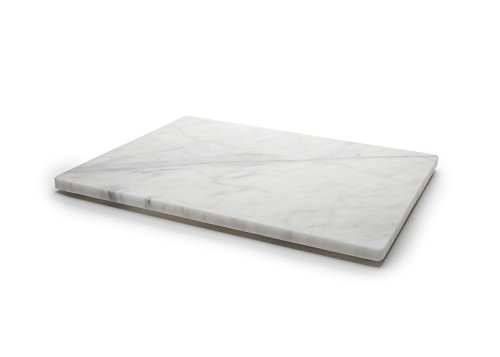
Fox Run Marble Pastry Board, 16 x 20 in
$70.39Marble stays below room temperature, which is why it is the traditional surface for tempering chocolate by tabling and for rolling fondant without it going sticky.
Best for: tabling chocolate and rolling fondant
Check price on AmazonAmazon prices move often, so check before you buy.
Questions people ask
- What does tempering chocolate actually do?
- Tempering controls the crystal structure of the cocoa butter in chocolate as it sets, which is what gives properly tempered chocolate a hard snap, a glossy shine, and resistance to melting at ordinary room temperature. Untempered chocolate still hardens as it cools, but usually sets soft, dull and prone to a chalky white bloom, and melts more readily when handled.
- Do candy melts or compound coating need tempering?
- No. Compound coatings and candy melts replace cocoa butter with a different vegetable fat, and it is specifically cocoa butter's crystal structure that tempering manages. Without meaningful cocoa butter in the recipe, there is no unstable crystal to control, so these products melt and set without any special temperature sequence, though they generally taste less like real chocolate than tempered couverture.
- Why does milk chocolate temper at a lower temperature than dark chocolate?
- Milk chocolate carries milk solids and typically less cocoa content overall than dark chocolate, and both milk fat and added ingredients lower the temperatures at which its cocoa butter melts and recrystallizes. Published manufacturer figures put milk chocolate roughly 5 F cooler than dark at every stage of the process, and white chocolate runs cooler again, since it has the least cocoa solid of the three.
- Can tempered chocolate be melted and reused?
- Yes, but it loses its temper once melted and has to go through the full melt, cool and reheat sequence again before it will set properly a second time. There is no limit to how many times chocolate can be retempered this way, provided it has not been contaminated with water or overheated to the point of scorching.
- Why did my tempered chocolate develop white spots or streaks after it was already set?
- This is bloom, caused by the cocoa butter partially melting and recrystallizing on the surface, usually from storing the finished chocolate somewhere with temperature swings, such as near a warm oven or in a fridge with condensation. It affects appearance and texture more than flavor, and remelting and retempering the chocolate resets it.
Related pages
How this page was put together
Researched from pan geometry, published manufacturer capacities, published serving conventions and university extension guidance. Not hands-on testing, and not professional advice.
Figures are labelled as derived, published or trade convention. Where no honest figure exists, the page says so rather than filling the gap.