Quick answer
A drip is ganache at a specific ratio: 1 part dark chocolate to 1 part cream by weight, 2 to 1 for milk chocolate, 3 to 1 for white, all published couverture figures. The cake must be properly chilled, not just crumb coated, or the drip runs to the board. Test one drip on the back first.

Ateco Flex Decorating Bag, Coated Nylon, 16 in, Reusable
Coated nylon stays flexible when the buttercream inside is cold, which a stiff plastic bag does not, and 16 inches is the size that holds enough to ice a tier without refilling.
Best for: a reusable bag that works with cold buttercream
Check price on AmazonA chocolate drip is not a separate product from ganache, it is ganache mixed at a specific ratio and poured at a specific temperature so it moves down the side of a cold cake and stops partway rather than running all the way to the board or refusing to move at all. Getting a clean drip comes down to three things working together: the right chocolate-to-cream ratio for the chocolate type, a ganache that has cooled to a workable pouring temperature rather than being poured straight off the heat, and a cake that is genuinely cold, not just crumb coated and left at room temperature.
The ratios below are published couverture manufacturer figures, run through the same ganacheFor math the site's ganache calculator uses, at 200 g of chocolate as a working example batch. For the full range of ganache uses, from a thin glaze to a firm truffle centre, see the ganache ratio reference and the ganache calculator. If the chocolate itself is being tempered rather than melted into cream, that is a different process, covered in how to temper chocolate.
What ratio of chocolate to cream makes a good drip?
The drip ratio sits between a thin, pourable glaze and a firmer soft filling, thick enough to hold its shape partway down the cake rather than pooling at the base. Figures below are for 200 g of chocolate as a working batch size; scale both numbers together for a larger or smaller batch.
| Chocolate type | Ratio, chocolate:cream | Chocolate (g) | Cream (g) | Total ganache (g) |
|---|---|---|---|---|
| Dark | 1:1 | 200 | 200 | 400 |
| Milk | 2:1 | 200 | 100 | 300 |
| White | 3:1 | 200 | 67 | 267 |
How do I make and apply a chocolate drip step by step?
- Chill the cake fully before doing anything else. The cake should be crumb coated, then genuinely cold, either refrigerated for 30 to 60 minutes or chilled in the freezer for 15 to 20 minutes; a trade convention starting point rather than a fixed rule, since a home freezer and refrigerator both vary in how cold they actually run.
- Weigh the chocolate and cream on a kitchen scale at the ratio for your chocolate type from the table above.
- Heat the cream until just simmering, then pour it over the chopped chocolate in a heatproof bowl, or melt both together gently over a bain-marie. Let it sit for a minute before stirring, then stir with a heat resistant spatula until fully smooth.
- Let the ganache cool until it thickens slightly and coats the back of a spoon, still fluid but no longer hot to the touch. Pouring it too hot is the single most common reason a drip runs too far.
- Test one drip on the back of the cake, or on a chilled test board, before committing to the front. If it runs too far, let the ganache cool a few minutes longer or add a small amount more chocolate. If it barely moves, warm it slightly or add a touch more cream.
- Transfer the ganache to a piping bag such as an reusable piping bag with the tip snipped small, or a squeeze bottle.
- Working around a cake turntable, apply drips just over the top edge at varying points around the circumference, letting gravity pull each one down the side to a different length for a natural look, rather than aiming for identical drips.
- Once the drips have set, fill in the top of the cake with the remaining ganache and add any toppers or decoration.
- Return the finished cake to the refrigerator to fully set before it travels or is moved, since a drip that has only partially set can smear or slide during transport.
Why did my drip run all the way down to the cake board?
This is almost always one of two causes, and usually both together: the cake was not cold enough when the ganache went on, or the ganache itself was poured too hot and too thin. A cold cake surface causes the ganache to firm up quickly on contact, which is what stops a drip partway down; a cake at room temperature gives the ganache nothing to set against, so it simply keeps flowing under gravity until it runs out of cake or reaches the board. Chilling the cake properly, not just for a few minutes but the full 30 to 60 minutes a crumb-coated cake needs in a refrigerator, along with letting the ganache cool to a coats-the-spoon consistency before pouring, resolves the great majority of runaway drips.
What if my drip is not behaving?
| Symptom | Likely cause | Fix |
|---|---|---|
| Drip runs all the way to the board | Cake too warm, or ganache too hot and thin | Chill the cake longer; let the ganache cool further before pouring |
| Drip won't move down the side at all | Ganache too cool and thick | Warm the ganache gently a few seconds at a time, stirring between |
| Drips are wildly uneven in length | Inconsistent pour speed or amount at each point | Practice on a test board first; apply a similar small amount at each point around the cake |
| Ganache looks grainy or seized after mixing | Chocolate and cream temperatures were mismatched, or a trace of water got in | Rewarm gently while stirring; start again with dry equipment if it does not smooth out |
| Drip cracks or looks dull once the cake is cut and chilled again | Ganache set too firm, or cake stored very cold for a long time | Bring the cake closer to room temperature for a short while before slicing and serving |
Can I use candy melts instead of ganache for a drip?
Yes, and it is a simpler process for anyone who does not want to work with cream at all: melted candy melts thinned slightly with a neutral oil behave similarly to ganache for drip purposes, running down a cold cake and setting as they cool, without needing tempering or a chocolate-to-cream ratio at all, since they contain no cocoa butter to manage. The tradeoff is flavor and mouthfeel, since candy melts taste noticeably less like real chocolate than a ganache drip made from couverture, and the color range on candy melts, while wide, is a different product from real white or milk chocolate for anyone trying to match a specific finish.
What this job actually needs
Ateco Flex Decorating Bag, Coated Nylon, 16 in, Reusable
$7.47Coated nylon stays flexible when the buttercream inside is cold, which a stiff plastic bag does not, and 16 inches is the size that holds enough to ice a tier without refilling.
Best for: a reusable bag that works with cold buttercream
Check price on AmazonAmazon prices move often, so check before you buy.

Kootek 12 in Aluminum Alloy Cake Turntable
$29.99An aluminum top at a fraction of the cast iron price, which spins smoothly enough for most work even though it is light enough to shift if you push hard.
Best for: a first metal turntable
Check price on AmazonAmazon prices move often, so check before you buy.
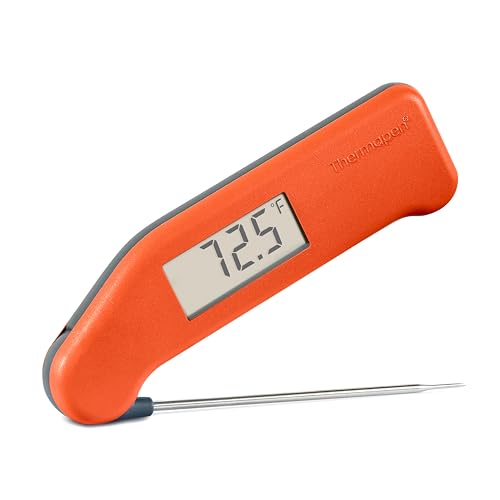
ThermoWorks Classic Thermapen Instant-Read Thermometer
$105.00The older Thermapen at a lower price, slower to read than the ONE but with the same probe accuracy, which is the part that matters for tempering.
Best for: accurate readings without the flagship price
Check price on AmazonAmazon prices move often, so check before you buy.
Questions people ask
- How long does a cake need to chill before adding a drip?
- As a working starting point, 30 to 60 minutes in the refrigerator for a crumb-coated cake, or 15 to 20 minutes in the freezer, though home refrigerators and freezers vary enough that this is a trade convention rather than a fixed rule. The cake surface should feel genuinely cold to the touch, not just cool, before the drip goes on, since a cake that is only lightly chilled will still let the drip run too far.
- Can I make the ganache for a drip ahead of time?
- Yes, ganache can be made a day or more ahead and stored covered in the refrigerator. Bring it back to room temperature and gently rewarm it to a pourable, coats-the-spoon consistency before using it, since chilled ganache sets firm and will not drip correctly straight out of the refrigerator.
- Why is my drip cake dripping unevenly or clumping at the top edge?
- Uneven drips usually come down to inconsistent pour amounts or pour speed at different points around the cake, rather than anything wrong with the ganache itself. A small test run on a chilled scrap board or the back of the cake helps calibrate how much ganache to release at each point before working around the whole cake.
- Can candy melts be used instead of chocolate ganache for a drip?
- Yes, melted candy melts thinned slightly with a neutral oil work as a simpler drip that needs no tempering and no chocolate-to-cream ratio, since they contain no cocoa butter to manage. They taste less like real chocolate than a ganache drip and are a genuinely different product from couverture, though they are a practical, low-effort option for casual cakes.
- How do I fix a drip that already ran too far down the cake?
- If the ganache has not fully set yet, gently smoothing it with an offset spatula can even out an overly long drip, though this often loses the intended drip look. Once set, the more reliable fix is chilling the cake further and adding a second, more controlled layer of drips over the first with a slightly thicker ganache, rather than trying to remove the original drip.
Related pages
How this page was put together
Researched from pan geometry, published manufacturer capacities, published serving conventions and university extension guidance. Not hands-on testing, and not professional advice.
Figures are labelled as derived, published or trade convention. Where no honest figure exists, the page says so rather than filling the gap.