Quick answer
Below 3,000 feet, published extension guidance calls for no adjustment. From 3,000 to 5,000 feet, cut baking powder by about 1/8 teaspoon per teaspoon, cut sugar by up to 1 tablespoon per cup, add 1 to 2 tablespoons of liquid per cup, and raise the oven 15 to 25 degrees. The changes grow again above 5,000 and 6,500 feet.
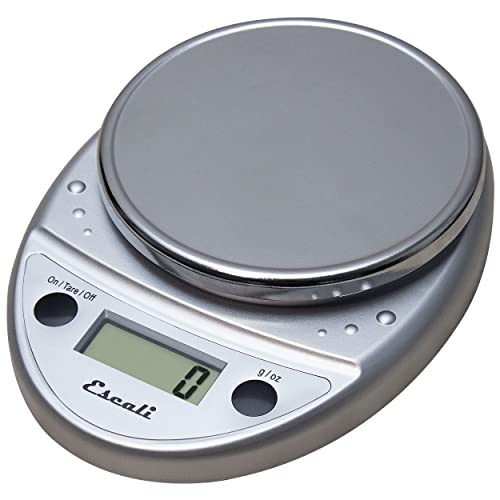
Escali Primo Digital Food Scale
The scale most often on a professional bench: it reads fast, tares instantly, and nothing about it is trying to also be a nutrition tracker.
Best for: weighing every ingredient, which is what makes scaling a recipe work
Check price on AmazonLower air pressure at altitude lets the gas bubbles in a batter expand further before the structure sets around them, and it also lets water boil off sooner. Published university extension service guidance responds with the same four levers every time: less leavening, less sugar, more liquid, and usually more flour, plus a slightly hotter oven so the structure sets before the bubbles overexpand. Below 3,000 feet none of this applies, and the guidance says so plainly rather than suggesting a token adjustment anyway.
The bands below come directly from published extension service tables and widen as elevation increases, because the effects compound. Run any elevation through the high altitude calculator, and change one variable at a time rather than all four together, since the bands overlap and a specific recipe reacts differently than the table alone predicts.
Each lever addresses a specific mechanism. Reduced air pressure lets carbon dioxide and steam bubbles expand further before the batter's structure catches up and traps them, so cutting leavening keeps the bubbles from overexpanding, and cutting sugar leaves a slightly stronger structure to hold them once they do. Faster evaporation at altitude pulls moisture out of the batter during a longer bake, which the added liquid replaces, and a small amount of extra flour gives the structure more strength to hold the larger bubbles until the crumb sets. The hotter oven simply gets that structure to set sooner, before the bubbles have as much time to overexpand.
A single test bake rarely tells the whole story either. Weather, humidity and even how vigorously a mixer creams butter and sugar change how much air a batter starts with, so a cake that comes out slightly domed on one attempt and slightly sunken on the next, using the same adjusted recipe, is usually pointing at one of those variables rather than the elevation figures being wrong.
How much should I cut baking powder and sugar at altitude?
These two levers work against the same failure: too much gas-forming power and too much sugar both weaken a batter's structure exactly when altitude is already stretching it further before it sets.
| Elevation band | Variable | Adjustment |
|---|---|---|
| Below 3,000 ft | Baking powder | No change |
| Below 3,000 ft | Sugar | No change |
| 3,000 to 5,000 ft | Baking powder | Reduce by 1/8 tsp per tsp |
| 3,000 to 5,000 ft | Sugar | Reduce by up to 1 tbsp per cup |
| 5,000 to 6,500 ft | Baking powder | Reduce by 1/8 to 1/4 tsp per tsp |
| 5,000 to 6,500 ft | Sugar | Reduce by up to 2 tbsp per cup |
| Above 6,500 ft | Baking powder | Reduce by 1/4 tsp per tsp |
| Above 6,500 ft | Sugar | Reduce by 1 to 3 tbsp per cup |
How much liquid and flour do I add, and how much hotter should the oven run?
These three move in the opposite direction from leavening and sugar: more liquid to replace what boils off faster, more flour for a structure strong enough to hold the larger bubbles, and a hotter oven to set that structure before the bubbles overexpand.
| Elevation band | Variable | Adjustment |
|---|---|---|
| Below 3,000 ft | Liquid | No change |
| Below 3,000 ft | Flour | No change |
| Below 3,000 ft | Oven temperature | No change |
| 3,000 to 5,000 ft | Liquid | Add 1 to 2 tbsp per cup |
| 3,000 to 5,000 ft | Flour | Add 1 tbsp |
| 3,000 to 5,000 ft | Oven temperature | Raise 15 to 25 F |
| 5,000 to 6,500 ft | Liquid | Add 2 to 3 tbsp per cup |
| 5,000 to 6,500 ft | Flour | Add 1 to 2 tbsp |
| 5,000 to 6,500 ft | Oven temperature | Raise 15 to 25 F |
| Above 6,500 ft | Liquid | Add 3 to 4 tbsp per cup |
| Above 6,500 ft | Flour | Add 2 to 3 tbsp |
| Above 6,500 ft | Oven temperature | Raise 15 to 25 F |
What does each altitude symptom usually mean?
The adjustments above are a starting point, and reading the cake that comes out of the oven is how you dial them in for a specific recipe and elevation.
| What you see | Likely cause at altitude | What to change first |
|---|---|---|
| Rises well, then collapses in the middle | Too much leavening or sugar for the reduced air pressure at this elevation | Cut baking powder and sugar together, one increment at a time |
| Domes heavily and cracks across the top | Oven not hot enough to set the structure before the bubbles overexpand | Raise the oven 15 to 25 F within the band for this elevation |
| Comes out dry despite a normal bake time | Faster evaporation during the bake, common well above 5,000 ft | Add the liquid adjustment for the band before changing anything else |
| Never rises much at all | Leavening cut too far for this specific recipe | Ease back toward the low end of the reduction range |
| Batter overflows the pan during baking | Leavening not reduced enough for the elevation | Cut baking powder further, staying within the band |
| Dense and slightly gummy in the center | Structure never firmed enough to support the expanded bubbles | Add flour within the band before changing the oven temperature |
Do I need to adjust every recipe by the same amount at a given elevation?
No, and this is the part a single chart cannot capture. A lean sponge cake with little sugar and no fat has very little structural margin to begin with, so it often needs the adjustment pushed toward the low end of each range or split across two smaller changes. A rich, dense recipe such as a pound cake or a mud cake already resists overexpansion on its own and sometimes needs less correction than the band suggests, occasionally none at all below about 5,000 feet.
Recipes that rely heavily on whipped egg for their rise, such as a genoise or an angel food cake, are the most sensitive of all, because whipped egg foam is mostly trapped air rather than chemical leavening, and altitude affects that air exactly the same way it affects baking powder gas. Reduce the whip time slightly rather than the egg quantity, and expect these recipes to need more trial runs than a simple butter cake does.
What this job actually needs
Escali Primo Digital Food Scale
$25.00The scale most often on a professional bench: it reads fast, tares instantly, and nothing about it is trying to also be a nutrition tracker.
Best for: weighing every ingredient, which is what makes scaling a recipe work
Check price on AmazonAmazon prices move often, so check before you buy.
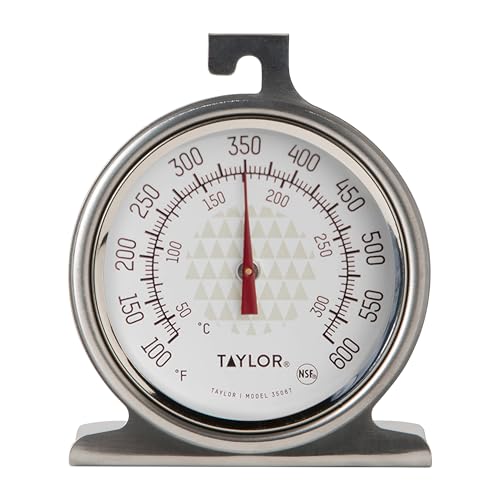
Taylor Large 2.5 Inch Dial Oven Thermometer
$8.28Home ovens routinely run 25 F or more off their dial, which is the real reason a bake time chart never matches your oven, and this is the cheapest way to find out by how much.
Best for: finding out what your oven actually does
Check price on AmazonAmazon prices move often, so check before you buy.

Bellemain Stainless Steel Flour Sifter with Hand Crank, 3 Cup
$18.99Sifting matters most for cocoa and powdered sugar, which clump into lumps that no amount of mixing will break up once they are in a batter.
Best for: cocoa, powdered sugar and cake flour
Check price on AmazonAmazon prices move often, so check before you buy.
Questions people ask
- Why is there no altitude adjustment below 3,000 feet?
- Published extension guidance starts its tables at 3,000 feet because the effect of reduced air pressure on a cake batter is small enough below that elevation to sit inside normal recipe variation. Most home ovens, ingredient brands and mixing methods already introduce more variation than altitude does at, say, 2,000 feet. Above 3,000 feet the effect becomes large enough to need a deliberate correction, which is why the guidance draws the line there rather than starting a small adjustment at sea level.
- Should I change all four variables at once for a new recipe at altitude?
- No. Change one variable, usually leavening first, bake a test batch, and see what the cake tells you before touching the next one. The bands overlap on purpose because a rich, dense cake and a light sponge respond differently at the same elevation, and moving all four levers together makes it impossible to tell which change fixed or caused a problem.
- Does altitude affect frosting and fondant the same way it affects cake batter?
- No, and this is a common mix-up. The altitude adjustments are about leavening gas expanding and water evaporating inside a batter as it bakes, neither of which applies to a frosting or a rolled fondant that never goes back into the oven. Cooked items such as sugar syrup and candy do shift at altitude, because the boiling point of water drops, but a buttercream or a ganache does not need any altitude adjustment at all.
- I am at 7,500 feet. Do I keep adding adjustments past 6,500 feet?
- The published guidance tops out at the above-6,500-feet band and does not extend further with additional per-thousand-foot increments, so 7,500 feet uses the same range as 6,500 feet: cut baking powder by about 1/4 teaspoon per teaspoon, cut sugar by 1 to 3 tablespoons per cup, add 3 to 4 tablespoons of liquid per cup, add 2 to 3 tablespoons of flour, and raise the oven 15 to 25 F. Very high elevations often need more testing than the table alone can predict.
- Why does the sugar reduction say up to a certain amount instead of a fixed number?
- Because how much a specific recipe needs depends on how much sugar it already carries relative to its flour and liquid. A lean sponge with little sugar has less room to cut before the texture suffers, while a rich, sweet layer cake can usually take the full reduction without anyone noticing. The range is the published guidance being honest that this variable needs judgment rather than a single number that fits every recipe at that elevation.
Related pages
How this page was put together
Researched from pan geometry, published manufacturer capacities, published serving conventions and university extension guidance. Not hands-on testing, and not professional advice.
Figures are labelled as derived, published or trade convention. Where no honest figure exists, the page says so rather than filling the gap.