Quick answer
Selling cakes made in a home kitchen is governed by state cottage food law, and the rules vary a great deal between states. Some cap annual sales, some prohibit anything needing refrigeration, and most require specific labelling. Read your own state's law directly rather than a general summary, since this page is researched guidance, not legal advice.
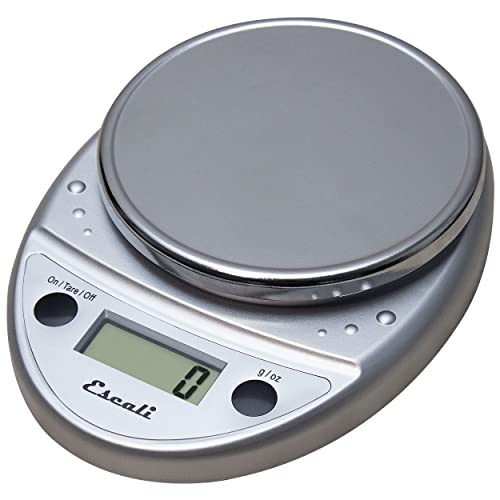
Escali Primo Digital Food Scale
The scale most often on a professional bench: it reads fast, tares instantly, and nothing about it is trying to also be a nutrition tracker.
Best for: weighing every ingredient, which is what makes scaling a recipe work
Check price on AmazonCottage food law is the set of state rules that let a home baker sell certain foods made in their own kitchen without the commercial kitchen licensing a restaurant or bakery would need. Nearly every state has some version of it, and that is where the similarity mostly ends. The rules genuinely vary a great deal from one state to the next, in what can be sold, how much can be sold in a year, whether refrigerated items are allowed at all, and what has to appear on a label.
This matters directly for cake specifically, because a filling like cream cheese frosting or a fresh fruit curd can push a cake outside what a cottage food operation is allowed to sell in a state that restricts refrigerated items, even though the same cake with a plain buttercream would be permitted. Say this plainly up front: nobody should treat this page, or any general page like it, as a substitute for reading their own state's actual statute or checking with their state's department of agriculture or health. This is researched guidance meant to point you toward the right questions, not legal advice for your specific situation.
What does cottage food law typically cover, and why does it vary so much?
Cottage food laws exist to let home bakers and small producers sell low-risk foods without the cost of a commercial kitchen, and cakes with a stable, non-perishable frosting are one of the categories most states include somewhere in that list. What differs by state is exactly where the line is drawn.
Some states set an annual gross sales cap on cottage food income, past which a producer has to move into a licensed commercial kitchen. Some states allow only shelf-stable baked goods and exclude anything that needs refrigeration, which is exactly where a cream cheese or whipped cream frosted cake can run into trouble. Some require a permit, a kitchen inspection, or a food safety course before selling anything at all, while others require none of those. A handful of states allow direct sales only, in person or by pickup, and prohibit shipping or mail order entirely. None of this is universal, which is exactly why a general summary cannot substitute for your own state's rule.
How do I check my own state's cottage food law step by step?
- Search for your state's official cottage food law page, usually hosted by the state department of agriculture or department of health rather than a general search result or a blog post.
- Confirm that cake, and specifically the type of frosting or filling you use, is on the state's approved list of cottage food products.
- Check whether there is an annual sales cap, and if so, what happens once you cross it.
- Check whether refrigerated items are allowed at all, since this is one of the most common places states differ and it directly affects cream cheese and dairy-based fillings.
- Read the required label elements closely; most states are specific about wording, not just content, and a label that is close but not exact can still be non-compliant.
- Check whether a permit, registration, food handler course or kitchen inspection is required before you can legally sell anything, and complete whichever of those apply before taking your first order.
- If your state's cottage food rules do not cover what you want to sell, look into whether a shared-use or licensed commercial kitchen is a realistic next step, since that path allows products cottage food law does not.
What do most states require on a cottage food label?
Requirements differ by state in wording and detail, but the categories below show up in some form in most cottage food laws. Confirm the exact required wording with your own state rather than copying this table directly onto a label.
| Label element | Why it is commonly required |
|---|---|
| Business or operator name and address | Identifies who produced the food, for accountability and any follow-up |
| Product name | States what the item actually is |
| Full ingredient list | Lets a buyer check for allergens or ingredients they avoid |
| Net weight or volume | Standard consumer information required on most packaged food |
| A disclosure that the product was made in a home kitchen not inspected by a health department | The core cottage food disclosure nearly every state requires in some wording |
| Common allergen statement | Cake almost always contains several major allergens: wheat, eggs, milk and often tree nuts |
What are the most common cottage food mistakes?
| Mistake | Why it matters | What to check instead |
|---|---|---|
| Assuming a neighbouring state's rules apply | Cottage food law is set state by state and can differ sharply even between adjacent states | Confirm the specific rule for the state you are selling in, not where a recipe or influencer is based |
| Selling a cream cheese or whipped cream frosted cake without checking | Several states exclude anything requiring refrigeration from cottage food sales entirely | Confirm whether refrigerated items are permitted before taking orders for that filling |
| Shipping cakes out of state | Many cottage food laws restrict sales to in-person or in-state only | Check whether your state allows shipping or requires in-person pickup or delivery |
| Skipping the required label wording | Some states specify near-exact wording for the required disclosure, not just the general idea | Copy the label requirement directly from the state's own published guidance |
| Not tracking annual sales toward a cap | Crossing an unnoticed sales cap can put a home baker outside legal cottage food status | Track gross cottage food sales through the year against your state's published limit, if one exists |
What this job actually needs
Escali Primo Digital Food Scale
$25.00The scale most often on a professional bench: it reads fast, tares instantly, and nothing about it is trying to also be a nutrition tracker.
Best for: weighing every ingredient, which is what makes scaling a recipe work
Check price on AmazonAmazon prices move often, so check before you buy.

Southern Champion White One-Piece Bakery Boxes, 10 x 10 x 6 in, 100 Count
$91.93A 6 inch tall box clears a tall two layer cake on a board, which the commoner 5 inch boxes do not, and a case of 100 is the unit anyone selling cakes buys in.
Best for: selling or gifting cakes at volume
Check price on AmazonAmazon prices move often, so check before you buy.

Nordic Ware Cake Lifter, 10 in
$25.99A flat 10 inch disc slides under a finished tier without flexing, which is the difference between moving a cake and dropping it.
Best for: moving a finished tier onto its board
Check price on AmazonAmazon prices move often, so check before you buy.
Questions people ask
- Can I legally sell cakes I bake at home?
- In most states, yes, under that state's cottage food law, which allows certain home-baked goods to be sold without a commercial kitchen license. What exactly is allowed, how much can be sold, and what labelling is required all vary by state. Check your own state's cottage food law directly rather than assuming a general answer applies to you.
- Does cottage food law let me sell cakes with cream cheese frosting?
- It depends entirely on your state. Several states restrict cottage food sales to shelf-stable items and exclude anything needing refrigeration, which can rule out cream cheese frosting, whipped cream and similar fillings. Other states permit refrigerated cottage food items under specific conditions. Confirm this directly with your state's published guidance before offering that filling for sale.
- Is there a sales limit for cottage food bakers?
- Many states set an annual gross sales cap for cottage food operations, past which a producer must move into a licensed commercial kitchen, though the amount and whether a cap exists at all varies by state. Track your sales through the year against your specific state's published limit, if one applies, rather than assuming there is no cap.
- Do I need a license to sell cakes from home?
- Cottage food law generally exists specifically to let home bakers sell without a full commercial kitchen license, but many states still require some form of registration, a permit, a food handler course or a kitchen inspection before selling anything. Check your own state's requirements, since these details differ significantly from one state to another.
- Where do I find my state's cottage food law?
- Search for your state's cottage food law on the official website of your state's department of agriculture or department of health, rather than a general search result or a summary blog post. These pages typically list allowed products, any sales caps, required labelling and any permit or registration steps, and they are the source that actually governs your situation.
Related pages
How this page was put together
Researched from pan geometry, published manufacturer capacities, published serving conventions and university extension guidance. Not hands-on testing, and not professional advice.
Figures are labelled as derived, published or trade convention. Where no honest figure exists, the page says so rather than filling the gap.