Quick answer
The KitchenAid Artisan 5 Quart Stand Mixer, about $399.99, earns a recommendation for home cake decorating: ten speeds, a genuine tilt head, and a published 9 cup flour capacity that covers a two layer 8 or 9 inch cake's batter in one bowl. It is the wrong mixer for tiered orders past a 9 inch base.

KitchenAid Artisan 5 Quart Tilt-Head Stand Mixer (KSM150PS)
A 5 quart bowl with a published 9 cup flour capacity holds enough batter for a two layer 8 or 9 inch cake in one batch, and the tilt head keeps scraping a buttercream bowl quick.
Best for: the buy-once home mixer for cakes and buttercream
Check price on AmazonVerdict: the KitchenAid Artisan 5 Quart Tilt-Head Stand Mixer (KSM150PS) at $399.99 is worth buying once for a home cake decorator who bakes two layer cakes up to about 9 inches regularly. It is not the mixer for someone stacking tiered wedding orders or running daily commercial volume out of a home kitchen, and the sections below explain exactly where that line sits.
This review comes entirely from KitchenAid's own published specifications for the KSM150PS and the consensus of verified owner reviews describing how the mixer holds up over years of buttercream and dough. Nobody on this site put a spatula in this particular bowl. What follows is what the ten speeds, the tilt head, the 5 quart bowl and the published 9 cup flour capacity actually mean once real cake batter and buttercream go into them, worked out with this site's own pan and mixer math rather than repeated from the box.
What does KitchenAid actually publish about the Artisan 5 Quart?
| Spec | Figure | Basis |
|---|---|---|
| Bowl capacity | 5 quarts | Published, KitchenAid |
| Published flour capacity | 9 cups | Published, KitchenAid |
| Speeds | 10 | Published, KitchenAid |
| Head type | Tilt-head | Published, KitchenAid |
| Motor | 325 watts | Published, KitchenAid |
| Price | $399.99 | Published, site catalog |
| Weight and dimensions | Not published | Not stated in the specifications used for this review |
| Warranty term | Not published | Not stated in the specifications used for this review |
What does a 9 cup flour capacity actually mean for a cake?
KitchenAid states the 5 quart bowl's flour capacity in cups of flour, which is not the same thing as cups of finished batter, since batter also carries sugar, fat, eggs and liquid. Converting that published 9 cup flour figure using this site's own mixer capacity convention, a bowl this size is used for roughly 60 percent of its rated flour figure in batter volume once the wet ingredients are counted, puts the practical batter ceiling at about 12 cups. The same bowl comfortably holds about 8 cups of egg white before whipping, since meringue needs headroom to roughly double in volume.
| Cake, 2 layers | Batter needed, both layers (cups) | Buttercream needed (cups) | Fits the 12 cup batter ceiling? |
|---|---|---|---|
| 6 in round | 5.22 | 3.6 | Yes, comfortably |
| 8 in round | 9.28 | 5.5 | Yes, comfortably |
| 9 in round | 11.74 | 6.6 | Yes, but almost no headroom left |
| 10 in round | 14.50 | 7.7 | No, mix in two batches |
Does the tilt head actually matter for buttercream?
A tilt head lifts clear of the bowl, which is what makes scraping down a stiff buttercream quick between additions of powdered sugar. The tradeoff, described consistently across owner reviews of tilt-head KitchenAid mixers, is that the head can flex very slightly under a heavy, cold buttercream load, which is part of why KitchenAid builds its 6 quart and larger bowls on a bowl-lift frame instead. For a 5 quart bowl at the batter and buttercream volumes above, that flex is not something owner reviews describe as a real problem; it turns up more often as a complaint on 5.5 quart tilt-head mixers pushed toward their published ceiling.
Who should not buy the KitchenAid Artisan 5 Quart?
Skip it if a 9 or 10 inch base tier is a regular order rather than an occasional one. The table above shows the 5 quart bowl running out of headroom right at a 9 inch two layer cake, and a 10 inch cake pushes past the 12 cup batter ceiling entirely, which means splitting batter into two batches every time. The 7 quart KSM70 exists for exactly that baker.
Skip it too if Swiss or Italian meringue buttercream is a weekly job rather than an occasional one. The consensus of verified owner reviews is that a bowl-lift frame, which locks the bowl rigid instead of hanging it on a tilt hinge, holds up better to a whisk running at speed for the several minutes a meringue needs. The KitchenAid 5.5 Quart Bowl-Lift Stand Mixer (KSM55) is built for that.
And skip it if the plan is a home bakery running several batches a day, every day. That is continuous duty, which is what KitchenAid's own commercial line is built and rated for, not a domestic tilt-head mixer.
How we assessed this
This review was researched entirely from KitchenAid's published specifications for the KSM150PS: bowl size, flour capacity, speed count, head type and motor wattage. No physical unit was run for this page. The consensus of verified owner reviews was used to confirm where the mixer holds up over years of buttercream and dough and where it does not, described here as consensus rather than as anything observed directly. Every batter, buttercream and mixer capacity figure above was run through this site's own pan and mixer math rather than pulled from a marketing page, so the numbers can be checked against the batter volume chart and the frosting quantity chart independently.
What should I buy instead of the Artisan?
The KitchenAid Classic Series 4.5 Quart Tilt-Head Stand Mixer (K45SS) at $399.00 covers the same two layer 8 inch cake on a published 8 cup flour capacity for slightly less, if one fewer speed and a half quart of bowl do not matter. The KitchenAid 5.5 Quart Bowl-Lift Stand Mixer (KSM55) at $499.99 trades the tilt head for a frame that will not rock while whipping meringue at speed. And the Cuisinart 12 Speed 5.5 Quart Stand Mixer at $216.65 gets a genuinely larger 5.5 quart bowl and two more speeds for roughly half the KitchenAid price, at the cost of the shared KitchenAid attachment hub. See the full stand mixers for cake decorating roundup for how all of these fit together by tier.
What this job actually needs

KitchenAid KFE5TS Flex Edge Beater for 4.5 and 5 Quart Tilt-Head Mixers
$49.99A flexible silicone edge that wipes the bowl wall as it turns, which is the single attachment that most improves buttercream, because unmixed butter clinging to the side is what makes a batch look curdled.
Best for: buttercream and creaming butter and sugar
Check price on AmazonAmazon prices move often, so check before you buy.
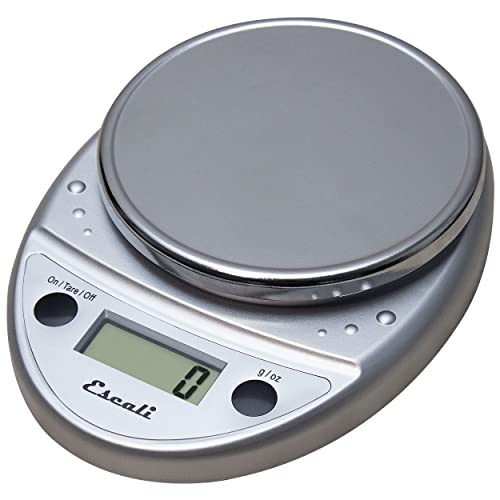
Escali Primo Digital Food Scale
$25.00The scale most often on a professional bench: it reads fast, tares instantly, and nothing about it is trying to also be a nutrition tracker.
Best for: weighing every ingredient, which is what makes scaling a recipe work
Check price on AmazonAmazon prices move often, so check before you buy.

Wilton Bake-Even Cake Strips, 2 Piece Set
$10.99Damp strips around the pan slow the outside so the middle catches up, which is what stops a dome forming and saves you levelling off the top and throwing it away.
Best for: flat layers with no trimming
Check price on AmazonAmazon prices move often, so check before you buy.
Questions people ask
- Is the KitchenAid Artisan 5 quart bowl big enough for a two layer 8 inch cake and its buttercream?
- Yes, with room to spare. Two 8 inch layers need about 9.28 cups of batter combined, and the buttercream to frost and fill them runs about 5.5 cups, both well under the roughly 12 cup practical batter ceiling this site derives from KitchenAid's published 9 cup flour capacity. A 9 inch cake gets closer to that ceiling, and a 10 inch two layer cake goes past it, which means mixing in two batches instead of one.
- How does the Artisan 5 quart compare to the cheaper KitchenAid Classic 4.5 quart?
- The Classic publishes an 8 cup flour capacity against the Artisan's 9 cups, a half quart smaller bowl, and one fewer speed. Both take the same KitchenAid attachments. For a two layer 8 inch cake the difference is marginal, since both bowls comfortably hold that much batter. The Artisan earns its slightly higher price mainly from the extra speed and the marginally larger bowl, not from a fundamentally different machine underneath.
- When should I skip the Artisan and buy the 7 quart KSM70 instead?
- Once a 9 or 10 inch base tier becomes a regular order rather than an occasional one. The Artisan's bowl runs out of headroom right around a 9 inch two layer cake and cannot hold a 10 inch cake's batter in one batch. The KSM70's published 14 cup flour capacity, converted through the same math, holds roughly 16.8 cups of batter, enough for a single 14 inch tier's batter in one pass.
- Is a tilt-head or bowl-lift design better for cake decorating?
- Tilt-head is easier to clean and scrape down, since the head lifts clear of the bowl, and it suits everyday layer cakes and buttercream fine at 5 quarts or smaller. Bowl-lift starts to matter once whipping meringue or Swiss buttercream at speed is a regular job, because the bowl locks rigid instead of hanging on a hinge that can flex. Neither design changes how much batter the bowl physically holds.
- Does the published 9 cup flour capacity mean the bowl can hold 9 cups of cake batter?
- No, and that distinction matters. Flour capacity is a dry-ingredient figure; finished batter also carries sugar, fat, eggs and liquid, which adds real bulk beyond the flour itself. Converting KitchenAid's published 9 cup flour figure through this site's mixer capacity convention puts the practical batter ceiling closer to 12 cups, and the egg-white ceiling for meringue closer to 8 cups, since whipped whites need room to roughly double.
Related pages
How this page was put together
Researched from pan geometry, published manufacturer capacities, published serving conventions and university extension guidance. Not hands-on testing, and not professional advice.
Figures are labelled as derived, published or trade convention. Where no honest figure exists, the page says so rather than filling the gap.