Quick answer
The Ateco 1301 fondant smoother, $7.94, is the tool to buy first: a flat face and a square corner from a trade supplier, replacing the unbranded two packs that dominate this search. A leveler set at $37.55 and a marble rolling board at $70.39 answer the next two problems, a crooked cake and a sticky roll.

Ateco 1301 Fondant and Icing Smoother
A flat-faced smoother with a square corner for pressing the base edge in, from a real trade supplier, at a price that makes the unbranded two packs pointless.
Best for: finishing a fondant covering
Check price on AmazonBuy Ateco 1301 Fondant and Icing Smoother at $7.94 first. It is a single flat smoother with one squared corner for pressing the base of a fondant covering flush against the board, and it is the trade version of a tool that this exact search mostly returns as unbranded two packs of unstated plastic.
Almost every other search for fondant tooling on Amazon returns the same problem: interchangeable seller names on what is visibly the same object. Where that is true below, it is stated plainly rather than guessed past.
What tool does a first fondant cake need?
One smoother and a way to stick pieces together covers a first fondant covered cake completely.
Ateco 1301 Fondant and Icing Smoother
$7.94A flat face and a square corner from a trade supplier, doing the one job of pressing air out and truing the sides, at a fraction of what a bundled kit charges for the same shape in unbranded plastic.
Best for: finishing a fondant covering smoothly
Check price on AmazonAmazon prices move often, so check before you buy.

Wilton Dab-N-Hold Edible Adhesive, 2 oz
$7.14Edible glue for sticking fondant pieces to each other or to the cake, which water does unevenly and buttercream does visibly through the covering.
Best for: assembling fondant decorations without a visible smear
Check price on AmazonAmazon prices move often, so check before you buy.
What fondant tool is worth buying once fondant is a habit?
The two tools that decide whether a covered cake actually looks straight are a leveler and a smoother tall enough to true the side against it, and buying them as a pair beats buying either alone.
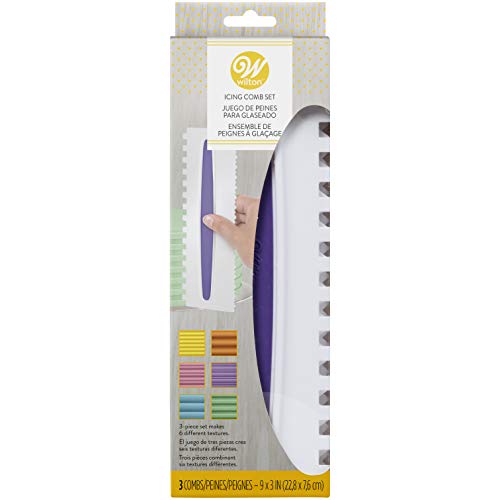
Wilton Cake Icing Smoother and Adjustable Cake Leveler Set
$37.55Pairs an adjustable leveler that cuts a genuinely flat top with a smoother tall enough to true the side against it, which is what stops a covered cake looking straight from the front and crooked from the side.
Best for: getting a cake square before it is ever covered
Check price on AmazonAmazon prices move often, so check before you buy.
What fondant tool is worth the professional price?
Past smoothing and leveling, the surface you roll fondant on matters more than any tool you press it with, and a cold, non-porous surface is what a busy decorator eventually buys.
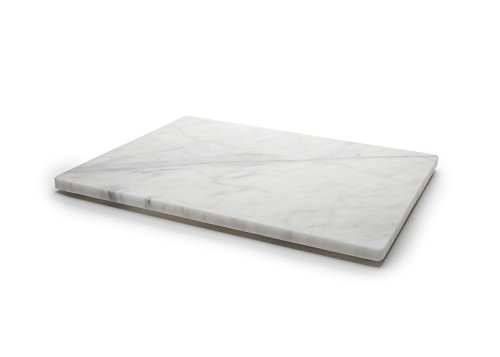
Fox Run Marble Pastry Board, 16 x 20 in
$70.39Marble stays below room temperature, which is what keeps rolled fondant from softening and sticking as you work it, without needing the extra dusting cornstarch that a warm laminate counter forces you to use.
Best for: rolling fondant without added cornstarch on a warm day
Check price on AmazonAmazon prices move often, so check before you buy.
Who should not buy this
Not for anyone who covers a cake occasionally and has counter space to think about. A 16 by 20 inch marble slab is heavy, needs a dedicated storage spot, and solves a problem, a warm rolling surface, that a once-a-year baker in a normally cool kitchen may never actually have. Get the smoother and roll on a lightly dusted counter instead.
How do these fondant tools compare?
| Tool | Job | Material or spec | Price |
|---|---|---|---|
| Ateco 1301 smoother | Smoothing a covering | Flat face, one squared corner | $7.94 |
| Wilton Dab-N-Hold | Sticking pieces together | Edible adhesive, 2 oz | $7.14 |
| Wilton smoother and leveler set | Leveling and smoothing | Adjustable wire leveler plus comb smoother | $37.55 |
| Fox Run marble pastry board | Rolling surface | Marble, 16 x 20 in | $70.39 |
| Nordic Ware Naturals half sheet | Rolling surface, budget | Aluminum, nonstick | $33.00 |
How we chose
These picks come from published manufacturer specifications, the standing catalog decisions recorded for this site (which unbranded listings were rejected and why), and the consensus of verified owner reviews. Nothing here was used in person to smooth, level or roll a cake for this page.
Where this catalog turned a product down, that decision is recorded rather than quietly revisited later: a search for a bundled fondant smoother set returned only unbranded two packs with no stated material or finish, which is why the standalone Ateco smoother is the pick here instead of a kit.
Buying tips
Roll fondant to about an eighth of an inch thick, the same convention the fondant calculator assumes. Thinner than that and the covering tears when it is lifted; thicker and it reads heavy on the cake and adds unnecessary sweetness to every slice.
A smoother with one square corner, like the Ateco 1301, is worth choosing over a rounded one, because that corner is what presses the covering flush against the board at the base rather than leaving a rounded, unfinished edge. Work the top of the cake first with the flat face, then the sides, popping any trapped air with a clean pin before it grows into a visible bubble under the surface.
Two categories genuinely have no branded product worth naming here. Acetate cake collars, used to hold a tall filling straight-sided while it sets, are sold almost entirely under interchangeable seller names with no manufacturer behind them; buy on stated thickness instead of brand, since anything under about 5 mil buckles when you fill against it. Cake decorating stencils used for a patterned buttercream or fondant finish are the same story: judge a stencil on thickness and whether it is long enough to wrap the cake in one piece, since a flimsy one flexes and smears the pattern and a short one forces a visible seam.
The working order matters as much as the tools themselves. Level the cake first with an adjustable wire leveler, since a fondant covering follows every irregularity in the surface beneath it rather than hiding one. Crumb coat and chill before draping fondant, because fondant laid directly over an unchilled buttercream surface tends to slide and ripple as it settles. Smooth the top of the covering first with the flat face of the smoother, then work down the sides in overlapping passes, and finish the base edge with the smoother's square corner pressed in against the board.
A marble board takes ordinary care but one real caution: acidic cleaners, and even some fruit juices left standing on the surface, will etch marble and dull its polish permanently. Wipe it down with mild soap and water and dry it promptly rather than reaching for a vinegar-based cleaner, which is fine on a laminate counter and is exactly the wrong thing for stone.
Dust the rolling surface with cornstarch rather than powdered sugar for anything but a very thin, quick roll. Powdered sugar dissolves into a fondant surface faster than cornstarch does, especially in a humid kitchen, which leaves a slightly tacky film that grabs the smoother instead of letting it glide, and cornstarch brushes off cleanly once the covering is in place. A dry pastry brush kept next to the rolling surface is the fastest way to clear excess dusting before it transfers onto the cake.
A few things worth knowing before any of this leaves the kitchen. Anything filled or coated with whipped cream or cream cheese needs refrigeration, and buttercream softens in a warm room long before it is unsafe, which is a structural problem rather than a health one. A ganache made soft, with more cream in it, is far less stable sitting out than a firm dark ganache made mostly of chocolate. Ask about allergies before you bake for other people, since cross contact happens at the mixing bowl rather than the table, and if you are selling rather than giving cakes away, that is governed by your state cottage food law, which varies a great deal.
What this job actually needs
Ateco 1301 Fondant and Icing Smoother
$7.94The fondant smoother from a trade supplier rather than an unbranded two pack, with a flat face and a square corner for pressing the bottom edge in.
Best for: finishing a fondant covering
Check price on AmazonAmazon prices move often, so check before you buy.
Wilton Cake Icing Smoother and Adjustable Cake Leveler Set
$37.55Pairs the two tools that decide whether a cake looks straight: a leveller that cuts a flat top and a smoother tall enough to true the side against it.
Best for: getting a cake genuinely square before decorating
Check price on AmazonAmazon prices move often, so check before you buy.
Fox Run Marble Pastry Board, 16 x 20 in
$70.39Marble stays below room temperature, which is why it is the traditional surface for tempering chocolate by tabling and for rolling fondant without it going sticky.
Best for: tabling chocolate and rolling fondant
Check price on AmazonAmazon prices move often, so check before you buy.
Questions people ask
- What is the difference between a fondant smoother and an icing comb?
- A smoother has a flat, solid face for pressing a covering smooth and true against the cake, while a comb has ridged or wavy edges meant to cut a texture into buttercream as it turns on a stand. They do different jobs: use a smoother on fondant to remove air and true the surface, and a comb on buttercream to add a deliberate pattern.
- Do I need a marble board to roll fondant?
- No. A clean counter lightly dusted with cornstarch or powdered sugar works for most home baking, and a marble board mainly helps on a warm day or in a warm kitchen where fondant softens and sticks as you roll it. It is a genuine upgrade for volume or professional work, not a requirement for a first cake.
- Why does my fondant stick to the smoother instead of the cake?
- Usually the fondant surface is slightly tacky from humidity or from being handled too much before smoothing. Dust the smoother's face very lightly with cornstarch, work in short passes rather than long drags, and let a freshly covered cake rest a few minutes before the final smoothing pass so the surface sets slightly first.
- What should I use instead of water to stick fondant pieces together?
- An edible adhesive like Wilton's Dab-N-Hold, rather than water or buttercream. Water thins fondant right where it touches, leaving a soft, discolored spot that stays visible once the piece is attached, and buttercream shows through a light colored covering no matter how thin a layer you use. A dedicated edible glue holds pieces securely without either problem, dries clear rather than tacky, and works on both fondant and gum paste pieces alike.
- Is a cheap unbranded fondant tool kit worth buying?
- Often not, for smoothers and combs specifically, since a search for these tools returns mostly interchangeable unbranded plastic from rotating seller names with no stated quality behind them. A single trade tool like the Ateco 1301 smoother, at under eight dollars, usually costs about the same as one piece from a bundled kit while coming from a maker that actually stands behind it.
Related pages
How this page was put together
Researched from pan geometry, published manufacturer capacities, published serving conventions and university extension guidance. Not hands-on testing, and not professional advice.
Figures are labelled as derived, published or trade convention. Where no honest figure exists, the page says so rather than filling the gap.