Quick answer
Yes, with an adjustment. A 10 inch bundt, 3.75 in deep pan holds 1.36 times what a 9 inch round, 2 in deep holds, so one batch of 9 inch round, 2 in deep batter fills it only 74 percent. Multiply the recipe by 1.36 to fill it properly, and take the bake time from a recipe rather than from the pan geometry.
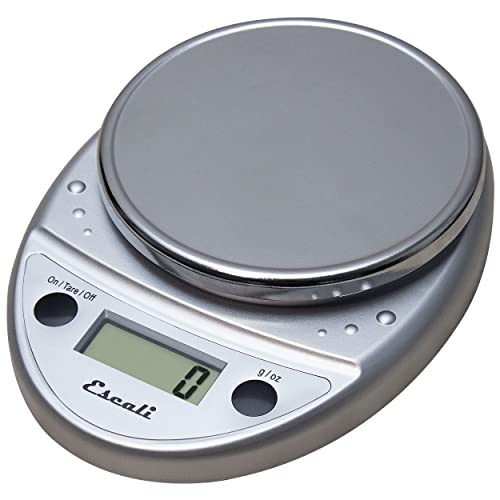
Escali Primo Digital Food Scale
The scale most often on a professional bench: it reads fast, tares instantly, and nothing about it is trying to also be a nutrition tracker.
Best for: weighing every ingredient, which is what makes scaling a recipe work
Check price on AmazonYou can, and the arithmetic is straightforward. A 10 inch bundt, 3.75 in deep pan holds 1.36 times the batter of a 9 inch round, 2 in deep, which is 36 percent more.
So pour one 9 inch round, 2 in deep batch straight into it and the batter has no flat floor to measure a batter depth against, because the interior is fluted. A fluted pan releases and bakes differently enough that the recipe matters more than the arithmetic here, though the capacity comparison still tells you how much batter to make.
Run any other pair through the pan substitution calculator.
How much batter does a 10 inch bundt, 3.75 in deep pan need?
| 9 inch round, 2 in deep | 10 inch bundt, 3.75 in deep | Basis | |
|---|---|---|---|
| Floor area (sq in) | 63.6 | Not derivable for this pan shape | Derived from dimensions |
| Volume to the rim (cu in) | 127.23 | 173.25 | Derived, or published for shaped pans |
| Batter at two thirds (cups) | 5.87 | 8 | Trade convention fill |
| Capacity ratio | 1.00 | 1.36 | Derived |
| Scale the recipe by | 1.00 | 1.36 | Derived |
What happens to the bake time?
This is the part that gets forgotten. Batter depth is the main driver of bake time, and swapping pans changes the depth whether you scale the recipe or not.
| What you do | Batter depth (in) | Estimated time (min) | Note |
|---|---|---|---|
| Bake in the 9 inch round, 2 in deep as written | 1.33 | 30 to 45 | At 350 F |
| Pour one batch into the 10 inch bundt, 3.75 in deep | Not derivable for this pan shape | Not derivable for this pan shape | A thinner or deeper layer, so the time moves |
| Scale to 1.36x and fill the 10 inch bundt, 3.75 in deep | Not derivable for this pan shape | Not derivable for this pan shape | At 325 F |
Does the substitution change the servings?
Yes, and not by the same ratio as the volume, because servings follow the top area while volume follows area times depth.
| Pan | Area (sq in) | Wedding | Party | Generous |
|---|---|---|---|---|
| 9 inch round, 2 in deep | 63.6 | 31 | 21 | 15 |
Before this cake leaves the kitchen
A few things worth knowing before this cake leaves the kitchen. Cream cheese frostings and anything with whipped cream need refrigeration, and plain buttercream softens in a warm room long before it is unsafe, which is a structural problem rather than a health one. Royal icing made with raw egg white, and mousses set with raw egg, are worth swapping for pasteurised egg white or meringue powder when you are baking for children, older guests or anyone pregnant. If you are baking for other people, ask about allergies before you start rather than after, because cross contact happens at the mixing bowl and not at the table. And if you are selling rather than giving cakes away, that is governed by your state cottage food law, which varies a great deal and is worth reading once properly.
What this job actually needs
Escali Primo Digital Food Scale
$25.00The scale most often on a professional bench: it reads fast, tares instantly, and nothing about it is trying to also be a nutrition tracker.
Best for: weighing every ingredient, which is what makes scaling a recipe work
Check price on AmazonAmazon prices move often, so check before you buy.

Fat Daddio's Anodized Aluminum Round Cake Pans, 8 x 2 in, 2 Piece Set
$24.69Two matched 8 by 2 inch pans, which is exactly one two layer cake, in the anodized aluminum that bakes flatter than a dark nonstick pan because it reflects rather than absorbs.
Best for: the standard two layer 8 inch cake
Check price on AmazonAmazon prices move often, so check before you buy.
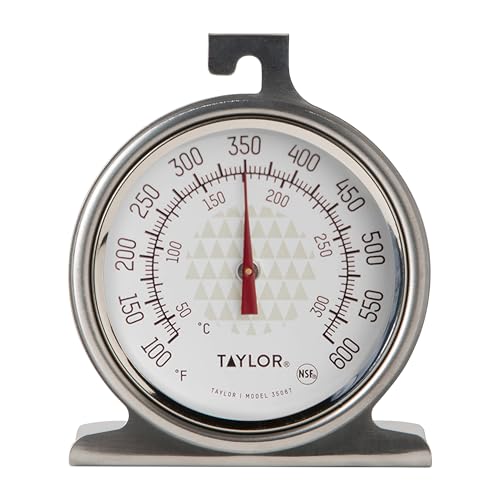
Taylor Large 2.5 Inch Dial Oven Thermometer
$8.28Home ovens routinely run 25 F or more off their dial, which is the real reason a bake time chart never matches your oven, and this is the cheapest way to find out by how much.
Best for: finding out what your oven actually does
Check price on AmazonAmazon prices move often, so check before you buy.
Questions people ask
- Do I have to scale the recipe to swap these two pans?
- Not necessarily, but a fluted pan is less forgiving than a flat one. Underfill it and the cake will not reach the top of the pattern, so the shape that is the entire point of the pan does not form. Scale by 1.36 if you want the pan to look the way it is meant to, and bake the surplus as cupcakes if you end up with any.
- How do I scale a recipe by 1.36 without getting it wrong?
- Weigh everything. A factor like 1.36 turns tidy cup measures into awkward fractions, and a third of a cup of flour by volume is not a third of a cup by weight because flour compacts. Convert the recipe to grams once, multiply every number by 1.36, and write the new figures down. Eggs are the one awkward ingredient: weigh them beaten rather than counting them.
- Will the cake taste different in a different pan?
- The crumb can change, which reads as a difference in taste. A deeper cake spends longer in the oven and develops more crust relative to its middle, and a thinner one develops less. Pan material matters too: a dark nonstick pan absorbs more heat and browns the outside harder than uncoated aluminium at the same oven temperature.
Related pages
- Can I Use a 10 inch round, 2 in deep Pan Instead of a 10 inch square, 2 in deep?
- Can I Use a 10 inch round, 2 in deep Pan Instead of a 12 inch round, 2 in deep?
- Can I Use a 10 inch round, 2 in deep Pan Instead of a 8 inch round, 2 in deep?
- Can I Use a 10 inch round, 2 in deep Pan Instead of a 9 inch round, 2 in deep?
- Can I Use a 10 inch square, 2 in deep Pan Instead of a 10 inch round, 2 in deep?
- Can I Use a 10 inch tube, 4 in deep Pan Instead of a 8 inch round, 2 in deep?
How this page was put together
Researched from pan geometry, published manufacturer capacities, published serving conventions and university extension guidance. Not hands-on testing, and not professional advice.
Figures are labelled as derived, published or trade convention. Where no honest figure exists, the page says so rather than filling the gap.