How much batter any pan takes at any fill level, and how deep it sits before it rises.
Quick answer
An 8 inch round pan 2 inches deep takes about 4.6 cups of batter, which is the pan filled two thirds out of 7 cups to the rim. Filled that far the batter sits 1.33 inches deep before it rises, and that depth is what drives the bake time.
The formula
batter (cups) = pan volume (cu in) x fill fraction / 14.4375
Pan volume is derived from the dimensions, and there are 14.4375 cubic inches in a US cup. Filling two thirds is the working convention: nothing physical happens at exactly two thirds, but most cake batters expand by somewhere between a quarter and a half, so a pan filled that far has the room and a pan filled to the rim does not.
A batter you know rises hard, such as a genoise or anything built on whipped egg white, is worth filling to half. A dense mud cake or pound cake takes three quarters comfortably.
Derived, published or convention?
The pan volume is DERIVED from its dimensions, except for fluted pans such as bundts, where the capacity is a PUBLISHED manufacturer figure because a fluted interior cannot be derived from an outside diameter. The fill level is TRADE CONVENTION.
Batter volume by pan at a two thirds fill
Pan
To the rim (cups)
Batter at two thirds (cups)
Batter depth (in)
As standard cupcakes
6 in round
3.92
2.61
1.33
10
8 in round
6.96
4.64
1.33
18
9 in round
8.81
5.87
1.33
23
10 in round
10.88
7.25
1.33
29
12 in round
15.67
10.44
1.33
41
14 in round
21.33
14.22
1.33
56
8 x 8 in square
8.87
5.91
1.33
23
10 x 10 in square
13.85
9.24
1.33
36
9 x 13 in rectangle
16.21
10.81
1.33
43
12 x 18 in rectangle
29.92
19.95
1.33
79
Capacities are derived from the stated pan dimensions. The fill level and the quarter cup per cupcake are trade conventions.
Gear for these numbers
These are rendered from the verified catalog and re-ordered against your numbers once you calculate.
Two matched 8 by 2 inch pans, which is exactly one two layer cake, in the anodized aluminum that bakes flatter than a dark nonstick pan because it reflects rather than absorbs.
Amazon prices move often, so check before you buy.
Questions people ask
What happens if I overfill a cake pan?
Two things, and the second is worse. The batter climbs over the wall and burns onto the oven floor, which is a mess but survivable. More importantly the extra depth means the middle takes far longer to set while the outside is already done, so you finish with a dark crust around a sunken, underbaked centre. Pour any excess into a cupcake liner instead.
How do I find the capacity of a pan I cannot identify?
Fill it with water from a measuring jug and record how much it takes to reach the rim. That gives you the rim capacity directly, and two thirds of whatever you measure is your batter figure. It is the most useful trick in baking because it works for novelty and character pans where no published capacity exists at all.
Should I measure batter by volume or weigh it?
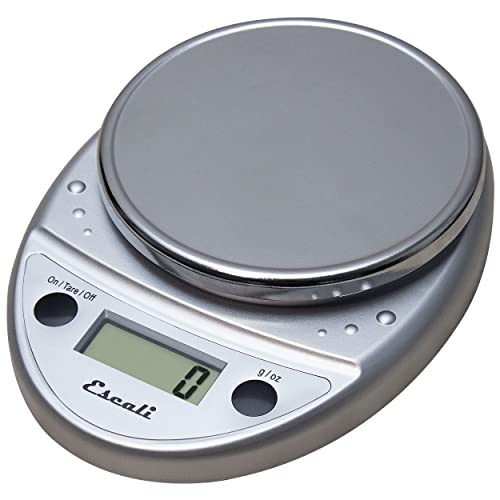
Weigh it. Put the empty pan on a scale, tare it, and pour until you reach the weight you want. Batter is thick and traps air, so a measuring cup reading is never quite what you think it is. If you are splitting one batch between two pans, weighing is the only reliable way to get two layers the same height.
Why does the calculator say two thirds rather than half or three quarters?
Because two thirds is what the trade uses as a default, not because anything physical happens there. It is a compromise that suits most butter and oil cakes. The fill field above is adjustable precisely because the right answer depends on your batter: set it to 50 percent for a genoise and 75 percent for a pound cake.
This calculator does arithmetic on the numbers you give it. It does not know your oven, your recipe or
your altitude. Figures are labelled as derived, published or trade convention, and where no honest
figure exists the calculator says so instead of producing one. Researched guidance, not professional advice.